Showing posts with label car. Show all posts

Sunday, 15 March 2020

#LifeHack #CarHack Get a trickle charger.

You can get a cheap and simple trickle charger.
This thing is a simple 12V DC transformer that plugs in with crocodile clips for attaching onto car battery.
It takes a good few hours to charge but plug it in and leave overnight and battery will be fully charged without the need for bringing the car on a big drive.
I had one originally for a motorbike which is long gone but it has rescued us in the car a few times over the years.

A few weeks ago before covid-19 we got all ready for hike, hike clothes on, boots, some food for picnic . . . 
We all piled out to the car . . .
Which refused to open! Not a geek out of it!
We used the key to unlock the driver door.
Key into ignition and turned . . completely dead .. no lights .. nothing!
Got a friendly neighbour to help jump start it . . . 
With their car running and attached with jump leads to ours the ignition lights went on ... but our car still han not enough oomph to start.

We postponed hike until next day.

Attached trickle charger.
In a few hours it started a bit reluctantly.
Left it attached overnight.
Next day it started grand.

We drove nervously around for the next week or so.
Battery is absolutely fine still (even though our car has been sitting doing nothing all week except for a shopping trip close to home).


HIKE

We did manage to go hiking . . . the next . . WEEKEND!
Over to the loop around Kilbride army camp - Seefingan tomb Seehaun hills,
Confirmed using viewranger, google photos, google maps location timeline . . . yes, the car battery fafooo was Sat March 14, I went for a local MTB three rock on March 15 and the NEXT weekend we went around Kilbride.
.


Got it! March 15th.
Google photos pic of the dashboard lights found.
Kia Carens ignition lights . . battery was dead, recharged over-night with trickle charger.


Here is the Seehaun Seefingan Kilbride circuit on Sat 21 March:
Corvid-19 restrictions just starting, exercise outdoors permitted.
We went to a quiet spot, it proved to be a good plan.
Around this time popular spots(Glendalough, Ticknock Three Rock, Knocksink in Enniskerry) were becoming VERY busy and problematic).
4 of us(me F D M) except Kate came.
We got jammed in tree fall on way up to Croghan.
Found an old fragment of map from a big run to Kippure and beyond.
Saw a dead rabbit near top of Croghan! :-o
Visited the tomb.
We put my bike near Seefingan at end of hike. I cycled back for car at end.

29 Feb visit to Knocksink, Storm Jorge. 3 Rock Scout Survivor we had to cancel! :-(
Fionn and I cycled to Knocksink and back and did a run.
I was interested in discovering ramsons(wild garlic) and lords and ladies growing close together.

Learning some new plants. A little wood anemony starting to appear In Knocksink woods near Ennniskerry. Pretty. Feb 29, wild garlic(edible) and lords and ladies(poison!) leaves emerging from the ground beside each other in places. Wood anemony related to buttercups, poisonous also. Mostly the wild garlic not in same place as the lords and ladies but in a few places they are and when very young can see how bits of the lords n ladies leaves might have been gathered by mistake. Be careful! Not sure what vthe big spear shaped leaves beside the ferns on wet banks are. Our scout Survivor we cancelled due to Storm Jorge orange wind warning for a time Sat afternoon weather was very windy and wet. We met 2 people with rucksacks who were beading to bivvy. Knocksink was very sheltered from the W/SW winds but it might have been an interesting afternoon/evening!!

Hart's Tongue fern and regular fern and spears of wild garlic appearing at base of tree. https://en.m.wikipedia.org/wiki/Asplenium_scolopendrium

More Hart's tongue fern. A hart being a male red deer. Ferns with simple, undivided fronds. As Gaeilge(Irish name): Creamh na muice fia. Creamh = Ramsoms = wild garlic. Muice fia = pig-deer, huh?. So, the ramsoms of the pig-deer. http://www.wildflowersofireland.net/plant_detail.php?id_flower=341&Wildflower=Hart%27s-tongue Latin Asplenium scolopendrium, scolopendrius=centipede, The sori pattern is reminiscent of a centipede's legs. A sorus (pl. sori) is a cluster of sporangia (structures producing and containing spores) in ferns and fungi. 

Be careful. Ramsoms, wild garlic. Edible. Lords 'n ladies(i think they are) very poisonous. Also ivy leaves and moss. Lords-and-Ladies / Cuckoo-pint / Arum
Arum maculatum / Cluas chaoin
Family: Araceae https://www.irishwildflowers.ie/pages/4a.html Ramsons / Wild Garlic / Allium ursinum(bear) /Creamh
Family: Lilaceae https://www.irishwildflowers.ie/pages/282a.html

Drive to Bray and walk Bray head on Sunday 23 Feb. With Fionn & the girls.


Thursday, 9 August 2018

diary/blog(bench repair, cycle to work, cars) and how Writing is like Engineering components that interfaces with brains

This morning mmmmhmm,
 I set off the alarm when I open the back door,
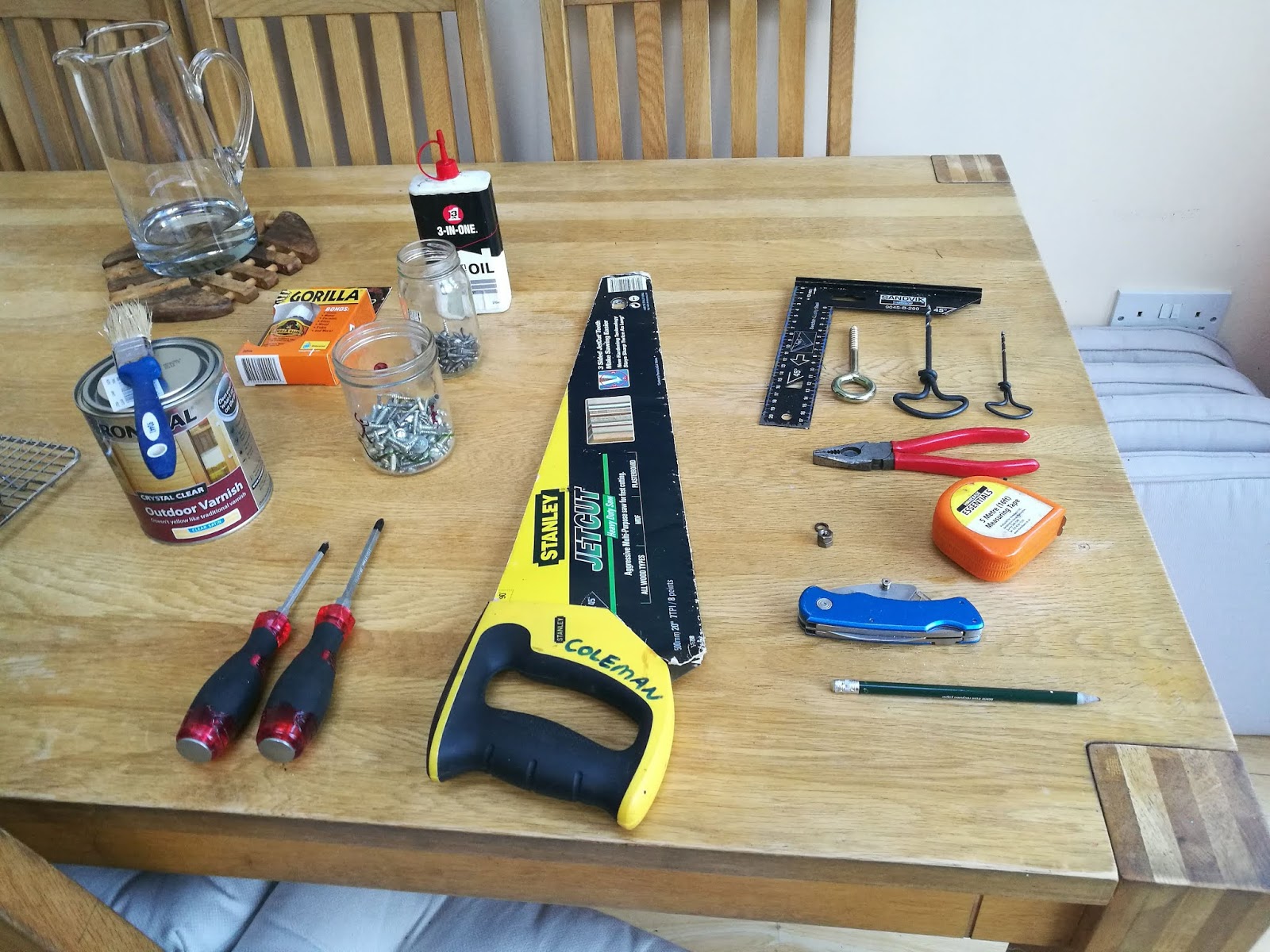
 I varnish planks for bench repair,
   I hear Fionnuala unmloading dishwasher,
  Quiet house, girls went to Cobh yesterday morning to visit
grandparents & cows & cat & dog & farm generally.
Bye to Fionn, quick coffee, cycle to ParcelMotel in Sandyford . . .
 Traffic in Sandyford village is slow, there must be a funeral ? cars
parking on pavements on the lower part of the hill away from the
shurch. I squeeze past/through.
 At the ParcelMotel bip bip bip bip bip bip - bip - wrong pin ? oops
enter mobile and pin bip * 10 bip * 6 bip kerchunk YAY.
  Unwrap. Shoe goo. - NOTE: as of 2023 TEC-7 stuff is much better for repairing boots etc . . .
   Into bag.
 Cycle on to work.
   Through Moreen, zoom cycle around roads, onto Drummartin bypass
traffic around but quiet enough,
   still it gets backed up as usual so bike catches up and undertakes
cars at each set of traffic lights,
   and I stop but then go walking pace through some red lights - very
quiet - no traffic moving through.


vibrant chain of thoughts after shower in work

Writing something is not like engineering and yet . .

With engineering each part has to function and mesh with other parts
and work together.
   The function and the mesh can be polished like a diamond or a
Toyota or a new Kia!
       And the whole works smoothly and it is a joy to behold.
   The function or the mesh might be a bit degraded,
       Yet the whole can still work albeit not perfectly.
   The function or the mesh might be degraded enough such that the
whole doesn't work any more.
   Maybe some repair could be done but it doesn't work.
The working or not working of the whole is obvious with engineering:
   a bench
   a road
   a bridge
   a canal system
   a bike
   a car
   a watch
   a computer ? maybe sometimes working is not so obvious!
   software . . . ?

With writing it is not so obvious if the parts do not work together.
   Writing has to connect with the mind of the reader,
     and mesh with modules of knowledge already there,
     and enhance some modules,
     and perhaps create new modules.
   Good writing will be efficient and state the minimum necessary to
engage with the mind of the reader.
Some writing is factual and some writing aims to impart facts and
techniques or methods.
   The mind of the reader is given information to load into modules,
   the mind of the reader is given instructions,
   so writing controls the mind and actions of the reader.
After reading,
  if the methods cannot be followed,
    it is less obvious if the writing is broken OR if the reader is
missing knowledge or skills or . . . something.
    Perhaps the writing would mesh better another reader with a
different set of knowledge.
    Perhaps the original reader would need to read other items or
practice skills before being able to understand.
    Or perhaps the writing is defective, incorrect in places or
misleading - correct but under certain conditions and complexity has
been left out.

Minimal and TLDR; versus comprehensive.
Need comprehensive yet simple documentation/info exchange, yet people
are too impatient to wait for or read comprehensive docs.
Combine writing with diagrams.
Reference to other documents. Divide up topic.

In school books were my friend.
Learning off by rote names or dates or lists of counties or chemicals
was not really my thing.
 Or poems or worse prose or irish quotes. Or french words or verbs!
 Or maths theorems.
Why learn things off if they were already written down ?
I always found that hard and convinced myself it was optional for a
clever chap like me.
 Anyway,
  somehow a decent vocabulkary of English words built up in my head.
 On occasion a more unusual word would come out in conversation
sounding normal in my head yet catching the ear of others who might
occasionally point out the novelty.
 Somehow lists of chemicals and facts about trees and physics and
maths and all sorts built up in my head.
 Some cool and simple enough poems like McCavity the Mystery cat,
Ozymandias, some Kavanagh stayed in my head for a while.
  Although the exact sequence is very hard to retain.
  As an adult learning song lyrics takes work . . and is very hard to
get to a rote state.
   First lines of verses will obstinately not pop into my head at the
right time :-7
   But with pratice and taking a step back to learn songs at different
levels works . .


With computers and software the engineering definition of "working"
seems to have become more fuzzy.
And as computers or more complexity are added into cars, washing
machines, lightbulbs the fuzzy workingness is becoming ubiquitous.
Our Renault Grande Scenic - great space inside - seats fold down to
make van space.
 Worked well for us for years, last couple of years the fundamental
problems were:
    1. air blowers stopped working, air heater stopped working,
       IF we had only known KEEP your air intakes (below windscreen
under grille at top of bonnet) free of leaves/gunk !!
    2. cylinder coil went in the end, too much to repair
 Various other issues were:
  Parking brake warning and stopped fixed nicely by Welsh parking
brake fixy people and local mechanic.
  Periodically a cylinder coil would degrade and need replacement.
  Windows:
    need to reprogram if battery went dead,
    near the end once a window went down by itself and stayed down,
for a week . . . and then started working again
       (I did clean/lubricate but not much),
    otherwise fine for us despite stories of funny window behaviour by
other owners.
  Sunroof: (need to keep lubricated - on new Kia as well)
  Seats (need to keep lubricated, clear rubbish so they fold or click
upright correctly.
  Very frequently blew light bulbs (dipped beams, main beam, others) :-P
  Keys: my key fob died and I killed it altogether trying to open the
case and solder a fix too hastily.

  Battery replaced periodically . . . serviced oil/air filters, oil,
windscreen wash . . . tyres, steering parts

The older fiesta similar major problems:
 1. Heater/air blower:
   mostly didn't work so cold and foggy windscreen in the winter
   occasionally did work but got stuck on hot so long trip down
country people overheating windows down
 2. rust underneath and coming up sides/doors
   repaired a few times to get through NCT
 Key twisty roundy needed to get replacement and program it.
 Paintwork rusty patches sprayed in very patchy manner.


Engineering software if I look at how some parts of system works . . .
Distributed system - a seemingly simple operation like checking
version - not designed, could be done in various ways. Answer now not
a simple "vx.xx.xx" but might be multiple versions + elements of
config. Complex systems. :-P  Yet not that complex. Bring back the
says of 64k RAM! Maybe :) It comes back to DESIGN. Design and
architecture of software components, how they mesh together. Same for
writing, architecture of what documents are needed, design of chapters
and diagrams, writing, implementation.


The Bench
Strong cast iron with wooden seat and wooden + cast iron back.
The wood was very poor and not treated well and started rotting very
quickly a year or so after buying bench.
I replaced most of the the bench seat planks retaining front most
curved one and rear and wood-stained all but didn't dismantle bench to
paint all surfaces. Lasted a few years with a clean and top up of
woodstain some time.

Now the planks on bench back are rotten (from the unpainted surfaces
in contact with cast iron).
And older unreplaced planks are more rotten so replacing almost all
now with new.

Measured. Bought wood. 2 planks:
 plank #1 W2 x L*2 x H
 plank #2 W x L*2+20cm*2 x H
  Let L = bench width 170mm I think.
  Let L2 = shorter plank at front ~168cm.
  Let W = 7cm new (original about 65mm) narrower planks on back sides
and on seat.
  Let W2 = 9cm new (original about 8cm) two wider planks on back.
  Let H = 18mm (or 20mm new planks (or 16mm smaller older planks)).
  For back:
    2 W2 x L x H
    2 short sides 20cm x W x H
  For seat:
    1 W x L x H at back
    1 W x L2 x H at front

Kate cut the planks to size(making a mistake cutting wide plank for
back slightly shorter length for front) but will work around that
using one narrow one wide plank on back. Kate took off one rotten
plank from front of bench. Kate hand drilled holes for front plank and
wood cracked a bit with force of bolt going in. Will varnish and
gorilla glue support the crack.
  Tue: Took rotten wood off back. Oiled bolts. Cleaned off bench/parts.
  Wed: I finished cutting. Measured and drilled bolt holes.
Sanded/cleaned wood. Applied white spirits and coat of varnish.
  Thur morn: applied another coat of varnish to new planks.
  TODO: Varnish on old wood on bench (take off all planks and do it properly?).
    Another coat of varnish on new wood.
    Assemble.
    Burn cool/cute things on backside ?


My Bike(s?):
  Pedal needs replacing on my hybrid commuter.
  And bell and water bottle holder.
  AFter JamboRi took carrier off MTB and put back on my bike and fixed
up mudguard.
  Mudguards are held with sisal and old broken bungee :-7 is ok for now.
TODO: Kate brakes, Kate mudguard lost on JamboRi I think
TODO: carrier for MTB >;) and pannier.

Tuesday, 10 November 2015

Traffic light enforcing technology to be rolled out at key junctions.

The council are to roll out a traffic light enforcing shield technology after a successful trial. Local city traffic management together with researchers and road technology company AntiForce have said that the device has increased traffic light compliance at selected junctions to almost 100%.

City engineer Seán Dough says they are very pleased with the exceptional results. "There has been worsening driver behaviour over the last few years. We have been seeing all sorts of shenanigans [which were] especially bad this year." "It started with vehicles racing through orange lights. We saw a trend [of drivers] going later and even later through the orange and red lights. Traffic on green were frequently driving in through vehicles that continued to drive through the red lights. Pedestrians didn't get a look in when we observed the junctions! In fact, we were seeing that [the] pedestrians only chance to cross was to go when traffic snarled up completely."

Mr Dough of the council has told us that they had tried a huge variety of methods in effort to influence road user behaviour. "We worked on signage." "Junction layouts were redesigned and realigned with leading transport industry best practice. All sorts of timing schemes were attempted." "Local education campaigns were run." "We have bent over backwards on an ongoing basis for a few years running now." In the last two years there were some accidents and tragically there were two of incidents of death involving vulnerable road users. A local campaign protesting about road deaths was running but a general consensus is that it did not seem to have an effect. Gardaí were also tasked with enforcement of traffic rules at problematic junctions. We are informed that operation Free Moving was successful while Gardaí were on the scene however Gardaí found it difficult to keep up with the amount of traffic rule violations while present and behaviour reverted and when Gardaí were absent. "We worked very hard to try and find a simple solution but nothing made a tap of difference".

The council took a new direction and started working with professor Maire Ní Chreidte and an International team about eight months ago. Initially monitoring of the junctions and the lights was done. Ms Ní Chreidte told us "We observed very agressive behaviour by vehicles. We are passionate about road safety in this team. We did not wish to spend years collecting data and publish a report at the end. We really wanted to solve this problem." A mix of academic and military or police technologies were examined and the team connected with the company AntiForce. "The timing was just right for us. The device had just been trialled and rolled out in a city state national basis by AntiForce.

How does the device work? Sting shield technology deploys on the same timing as the traffic lights. The marking stop line at each side of junction contains the device embedded along the full width of the line. Upon the green to orange light transition the shield deploys upwards. When fully extended a tyre moving over the sheild will be penetrated by sting needles and the tyre is held in place on the line. Upon the red to green light transition the sheild retracts and traffic can move freely over the line. AntiForce say cyclists can move through the stop line for cars into the cycle forward stop area by steering carefully between or hopping over the needles. A higher density needle mesh on the cycle stop line then enforces cycle compliance. The company say pedestrian sting barriers are among  future developments. Mr Dough said "We were looking for a comprehensive and effective solution and we are well pleased to have found one."

Traffic light enforcing technology unobtrusively embedded in the stop line.
A vehicle is held on orange or red.
Public opinions of road users to the new device seems to be mixed. Some drivers queried expressed the opinion that the junction would work better as a free for all without lights or controls. "No need for it, complete overkill! Just slowing things down and wasting time and money." said one van driver. The consensus among some pedestrian users of the junctions was that it was much better but that care was still required when traversing the road. "The cars are wise to it now. The locals anyway. And the ones from further are inclined to be more hesitant though almost all driving over the line o course. It's a bit of craic now watching the bemusement [when the] car stops sudden like. Some good ones if tearing through. I haven't seen any rear endings myself, I suppose the drivers are used to the odd swerve or sudden stop.

We queried AntiForce about the safety aspects of the device and we were informed that the needles were resin coated so that tyre penetration would almost never in and of itself be the sole cause of a tyre puncture. We were also assured that the measured increase in safety for junction users was significantly larger and cancelled the smaller increase in risk with vehicles coming to an enforced stop on red which may be of an unexpected nature.

It now looks like the trial here is set to be the basis of a roll out of the technology across a wider area. Be alert and watch for these devices at the stop lines!

Please remember our road space is a shared space, drive and use it defensively and with care and consideration for other users.

#TrafficLightEnforcing #StingShield technology @WaterfordWhispers

Monday, 20 July 2015

learning to drive - teaching someone to drive - materials on internet and first lessons

Daire is 17 and has passed his driving theory test. And has a provisional licence. And is insured on a fiesta. So we are all set to start properly learning to drive. He rides a bike around quite a bit already. So has some road experience from that. A small/occasional amount of experience driving a car/tractor/lawn mower in field has given a feeling for control of driving something with an engine.

So now what do we do? :-) Ready to start driving! 

As we are new to teaching driving we looked it up a bit. There is some good info from UK and USA on teaching young people to drive. Good to start with that. This gives a few things to think about before starting. There is a useful sheet from UK driving which gives a full sheet of driving skills and a techniques. You can plan roughly what skills you will work on - so both instructor and strudent could look them up before-hand, so you can go out on the road with a plan (know where you are going and what to do). A checklist tracking progress on each skill makes sure you cover all the skills needed over time. 

A straight-forward introduction:

A very good quick-reference list of skills (reminder to teachers what to teach and work on).
And a skills/prograss chart:

Here is an electronic copy of that very useful skill progress checklist:
Learning to Drive - Driver's Record. Google sheets.
Learning2Drive_DriversRecord.pdf
Learning2Drive_DriversRecord.ods
Because paper copies are easy to misplace :-7

For the teachers: You have to be a good driver and ALSO a good teacher. We are beginner driving teachers! So a bit of thought and patience required between teachers and student! :-) 

I found learning to drive a motorbike ~ about 10 years ago ~ very useful for my driving. I had to pass the driving theory test (newly introduced to Ireland) and I have worked on learning advanced driving techniques and putting them into practice (on bikes and in car). Motorbiking and cycling give very good attention and concentration and awareness on the road. Motorbikes use defensive driving which is also very good to employ when driving any vehicle. Also a long time ago driving tractors and cars with trailers on the farm gave an awareness of how trucks and trailers and buses manouver - which is useful when close to them in traffic. 

First couple of lessons: clutch bite point, road positioning

First up is find a safe location to start the engine and get moving. There is a big and quiet car park not too far away from where we live which was good for us. 2 sessions and we have found getting moving forward (finding bite point of clutch and balancing. Fionnuala did the first and I did the second. Daire did both! 

To explain clutch bite point we had to think about it! Jump in the driver seat. Move off. Think about what we were doing with our legs. The important thing (that is automatic to us) with clutch leg is we hold our clutch leg quite stiffly, not allowing it to move up or down (except as we want it to) and as car starts moving we do not allow leg to wobble but maintain control over it. Gentle or no acceleration needed if moving off downhill. A little bit of acceleration needed on flat of uphill.

During these first lessons there is ALOT to learn. We are also learning instrument controls, observation (of parked cars and the occasional other learner car in car park), road positioning - while moving forward in between practicing starting - positioning in straight and when turning. And the skills have to be applied simultaneously! They become automatic to experienced drivers. So it is important to take things at a very steady pace. 

There were some slight inclines in the quiet car-park so once Daire was getting the hang of starting on the flat we started stopping on the incline and practiced starting when a bit more acceleration was required.

And we added in reversing straight and reversing while turning. 

Next lessons, Introduction to quiet roads - industrial estate - junctions - moving off and turning

A driver has to be very skilled at moving off (straight or at left or right turn into traffic) to drive on public roads. Every stop at a junction or in traffic involves a move-off again. So next we are working on moving off (still working on clutch control). In industrial state, there are some T junctions to handle, and we pull into a car park. Stop in parking spot. Reverse and pull out onto road again. There are a mix of inclines on road and in car parks. And of course observation and signalling is being practiced continually.

At the end today we went out of industrial estate (straight through a set of traffic lights). Then straight - left at junction - right at set of traffic lights (three lanes in road). Lane positioning needs work. At the start today we started from home in housing estate (tricky!) and mixed up driving on roads.

He's going at quite a fast pace once he gets moving. A bit too fast in turns and on corners. A common problem apparently for learners. I think because it is difficult to drive quite slowly with control. So will have to work control moving car nice and slowly. 

Next next . . . 
 + Work on good vehicle control moving off and road positioning when manouvering. 
 + Practice of proper observation and signalling is happening together with driving.
 - Work on physical accuracy with moving the car forwards and backwards - straight and in turns is needed. 
    So narrow roads/lanes lined with - cones - or something would be ideal.
 - More reversing and introduce 3-point-turns
 - . . . 

That will all be needed for the official driving lessons and tests as well as for good driving.


I find it good to read about the rules of road and theory of the techniques you are working on as I am learning. There is some good material on youtube and internet (and a lot of not so good!). The advanced driving techniques from police driving instructors are good. It keeps skills fresh. 

Some more links:


A parent & teen learning to drive guide from California . . .
https://www.dmv.ca.gov/portal/wcm/connect/b615c5c3-5a73-4e7b-b571-9850032730be/dl603.pdf?MOD=AJPERES

This has some more good info on Moving Off and Stopping techniques:
http://www.drivingtesttips.biz/moving-off-stopping.html

There are some good driving learning videos on youtube . . .
e.g. reversing (slowly but very controlled) https://www.youtube.com/watch?v=IKd0GXZ39U8
But there are also some bad ones!
Ones from driving schools are probably better.

https://en.wikipedia.org/wiki/Motorcycle_training

Good book: Motorcycle Roadcraft: The Police Rider's Handbook to Better Motorcycling